
By Thyme At Home
Canning is one of the most satisfying ways to preserve your harvest—but knowing whether to use water bath or pressure canning can be confusing (and risky if you guess wrong). Let’s break down the difference so you can preserve your food safely and confidently!
🔥 Water Bath Canning
What it is:
A simple boiling water method used for high-acid foods. Jars are submerged in boiling water for a set time to kill bacteria, yeasts, and molds.
Best for:
- Jams & jellies
- Fruit preserves
- Pickles
- Tomatoes (with added acid)
Tools needed:
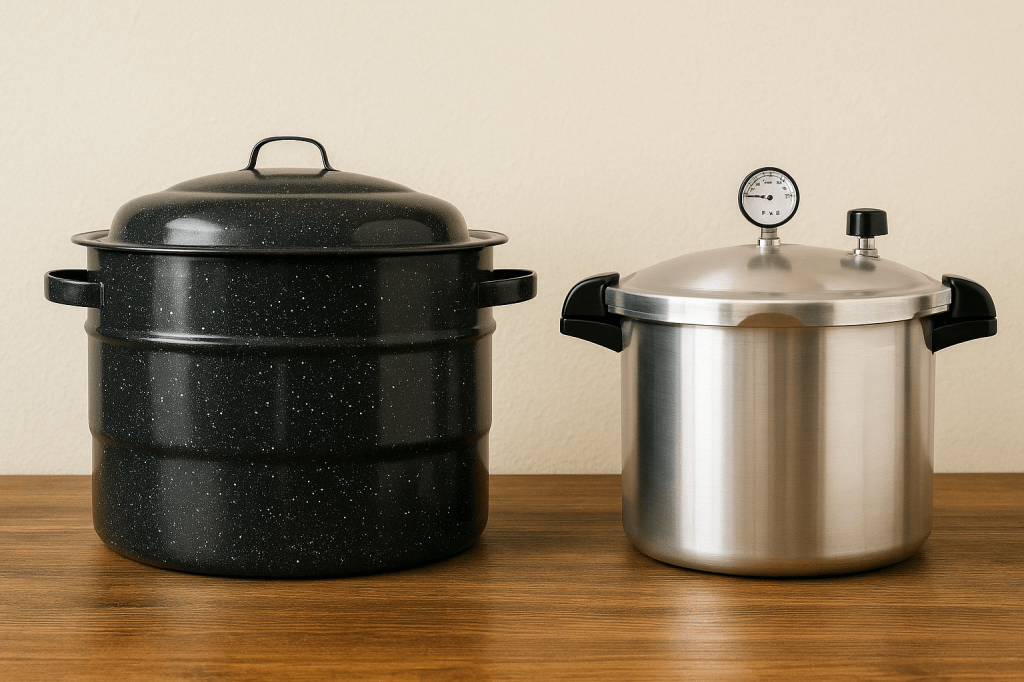
✅ Water bath canner or large stockpot with rack
✅ Canning jars with lids & rings
✅ Jar lifter, funnel, and bubble remover
Pros:
✔️ Easier for beginners
✔️ Less expensive equipment
✔️ Faster process for many recipes
💨 Pressure Canning
What it is:
This method uses high-pressure steam to reach temperatures of 240–250°F—high enough to kill Clostridium botulinum, the bacteria that causes botulism in low-acid foods.
Best for:
- Vegetables like green beans, corn, and carrots
- Meats, broths, and stews
- Chili, soups, and beans
- Potatoes and squash (cubed)
Tools needed:
✅ Pressure canner (not just a pressure cooker!)
✅ Heat-safe jars with tested recipes
✅ Altitude adjustment chart
Pros:
✔️ Safe for low-acid foods
✔️ Allows long-term shelf stability
✔️ Great for preserving entire meals
⚠️ Why It Matters
Using the wrong method can make your food unsafe—especially for low-acid items. Water bath canning won’t kill botulism spores. If you’re ever in doubt, use pressure canning or freeze the food instead.
📋 Quick Reference Guide
| Food Type | Method | Add Acid? |
|---|---|---|
| Applesauce | Water bath | Optional |
| Green beans | Pressure canning | No (required method) |
| Pickles | Water bath | Vinegar-based |
| Meat stew | Pressure canning | No |
| Tomatoes | Water bath | Yes (lemon juice) |
💬 Final Thoughts
Whether you’re making peach jam or putting up garden beans, knowing when to use water bath vs. pressure canning is essential. With the right tools and knowledge, your pantry will be stocked safely for seasons to come!
Happy canning!
– Taylor from Thyme At Home
 Thyme At Home
Leave a comment